India Asserts Only Dalai Lama Can Choose Successor, Rejects China’s Claim
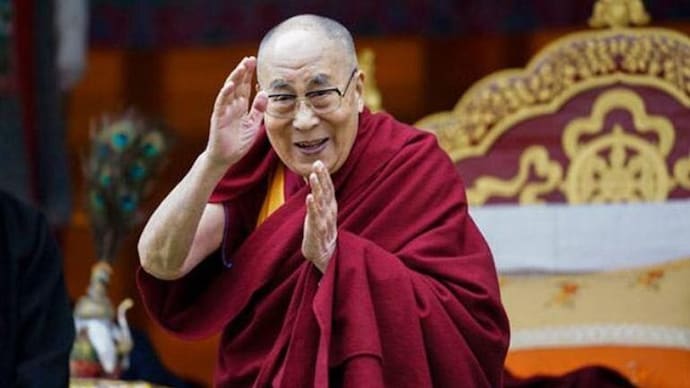
India has firmly dismissed China’s claim over the reincarnation of the Dalai Lama, stating that only the Tibetan spiritual leader himself holds the authority to choose his successor.
Union Minister for Minority Affairs Kiren Rijiju, currently in Dharamshala to participate in events marking the Dalai Lama’s 90th birthday, emphasized that the decision lies solely with the Dalai Lama. “The position of the Dalai Lama is of utmost importance, not just for Tibetans but for all his followers across the world. The right to decide on his successor rests solely with the Dalai Lama himself,” Rijiju said.
His statement comes amid Beijing’s renewed insistence that the next Dalai Lama must be approved under Chinese law. China’s Foreign Ministry spokesperson Mao Ning reiterated that the reincarnation must adhere to “Chinese laws, religious rituals, and historical conventions,” and be carried out under Beijing’s supervision.
Gaden Phodrang Trust to Determine Successor
Responding to China’s claims, the Dalai Lama’s office clarified that only the Gaden Phodrang Trust, his official institution, has the authority to oversee the process. “The procedure for identifying the future Dalai Lama has been clearly outlined in the 24 September 2011 statement. The responsibility rests solely with the Gaden Phodrang Trust,” the statement read.
The Dalai Lama himself reaffirmed that the centuries-old tradition of his spiritual lineage will continue, and decisions about it cannot be dictated by any external government.
A Religious Matter, Not Political
Rijiju underscored that the occasion in Dharamshala was “purely religious” and not political, despite the geopolitical undertones surrounding the issue.
Joining Rijiju was Janata Dal (United) leader Lallan Singh, both representing the Indian government at the celebration.
Tibet’s Spiritual Symbol in Exile
Since fleeing Tibet in 1959 following a failed uprising against Chinese rule, the Dalai Lama has lived in exile in India. While China considers him a separatist, the global community widely sees him as a symbol of peace, non-violence, and Tibetan identity.
In 2011, the Dalai Lama transferred political power to a democratically elected Tibetan government-in-exile, representing about 130,000 Tibetans worldwide. At the time, he warned that China might attempt to manipulate the reincarnation process for political purposes.
Concerns persist among Tibetans and rights groups that Beijing could install its own Dalai Lama to strengthen its control over Tibet, thereby undermining Tibetan religious and cultural autonomy.