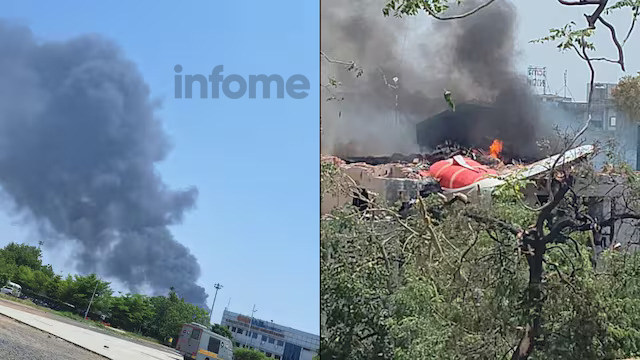
Air India Crash Mystery Deepens as Cockpit Audio Reveals Startling Clues

Ahmedabad – Investigators probing the tragic crash of Air India Flight 171 have uncovered a chilling development from the aircraft’s cockpit voice recorder, intensifying the mystery surrounding one of India’s deadliest air disasters in recent memory.
The Boeing 787 Dreamliner, just 12 years old, plunged into a crowded neighborhood in Ahmedabad shortly after takeoff in June, killing all 260 people on board. According to the preliminary investigation, both fuel-control switches were suddenly moved to the “cut-off” position moments after takeoff—an action typically performed only after landing. This instantly cut fuel supply to both engines, causing a complete loss of power.
The cockpit voice recorder captures one pilot asking, “Why did you do the cut-off?” followed by a response: “I didn’t.” However, it remains unclear who made either remark. At the time, the co-pilot was flying the aircraft, while the captain was monitoring.
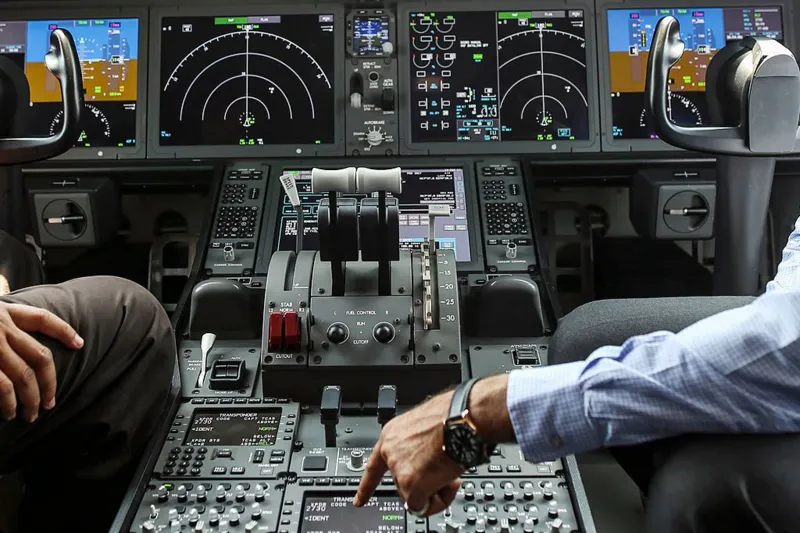
Although the switches were quickly returned to their proper positions—automatically initiating engine relight—one engine failed to regain sufficient thrust before the aircraft crashed, while the other had just restarted.
Flight 171: What Happened in the Final 40 Seconds
The aircraft was airborne for less than 40 seconds and reached a height of 625 feet before vanishing from radar, according to Flightradar24. The incident occurred in clear weather, and Saturday’s 15-page preliminary report sheds light on what transpired in those brief moments.
The inquiry—being conducted by Indian authorities with assistance from Boeing, GE, Air India, Indian regulators, the US National Transportation Safety Board (NTSB), and UK experts—focuses heavily on the cockpit voice and flight data recorders.
Investigators emphasize the reliability of the lever-lock fuel switches, a system in use since the 1950s. The switches require a deliberate upward pull to unlock and flip, making accidental activation highly improbable. Safety brackets further prevent unintended operation.
A Canadian air accident expert noted, “It would be almost impossible to pull both switches with a single hand. Accidental deployment seems unlikely.”
Who Moved the Switches—and Why?
Aviation experts are raising tough questions. Shawn Pruchnicki, a former accident investigator and Ohio State University professor, said, “Was it intentional, or a result of confusion? There was no indication of abnormal conditions. In emergencies, errors occur—but this doesn’t fit that pattern.”
Peter Goelz, former managing director of the NTSB, described the discovery as “deeply disturbing,” adding that the voice recorder alone doesn’t yet offer sufficient context. “A single statement isn’t enough. We need full transcripts and voice identification.”
Investigators stress the importance of identifying which pilot moved the switches and have called for cockpit video recorders—devices currently not mandated but capable of providing visual evidence of pilot actions.
Both pilots had passed breathalyser tests and were deemed fit for duty. They had adequate rest and had arrived in Ahmedabad the day prior.
Could the Aircraft’s Systems Be to Blame?
Another crucial aspect of the investigation centers on the possibility of an electronic malfunction. In December 2018, the US FAA issued a Special Airworthiness Information Bulletin regarding Boeing 737 fuel switches potentially being installed without locking features. Though it didn’t warrant a regulatory directive, the same switch design is present in the Boeing 787-8 used in Flight 171.
Air India did not conduct the recommended inspections since the bulletin was advisory in nature.
Some investigators are now questioning if the fuel switches could have been tripped electronically by the aircraft’s control systems, without manual input. “If that’s possible, it’s a major issue,” Mr. Pruchnicki said.
Others are more skeptical. “Pilots usually flag such issues quickly. This may be a distraction,” Mr. Goelz remarked.
Capt. Kishore Chinta, a former investigator with India’s AAIB, echoed concerns, wondering whether the aircraft’s electronic control unit could trigger the cut-off switches without human action.
Mechanical Failure or Human Error?
Fuel samples from the aircraft were deemed satisfactory, ruling out contamination as a cause. Mechanical failure has not been confirmed, but experts believe the deployment of the aircraft’s Ram Air Turbine (RAT)—a backup power generator activated during dual engine failure—confirms that both engines lost power.
The landing gear was found in the down position, which pilots say is not surprising in such an emergency. “At 200 feet, gear retraction begins. But when both engines fail, survival instincts take over—you’re focused only on finding a place to land,” one 787 pilot explained.
Mr. Pruchnicki further stated, “The engines were restarted—but one didn’t recover in time. It was too little, too late.”
As the investigation continues, critical questions remain unanswered: who moved the switches, and why? The answer may lie in the full audio review, voice identification, and potentially, in future cockpit video data.