Iran Fires Fattah-1 Hypersonic Missile at Israel: All You Need to Know
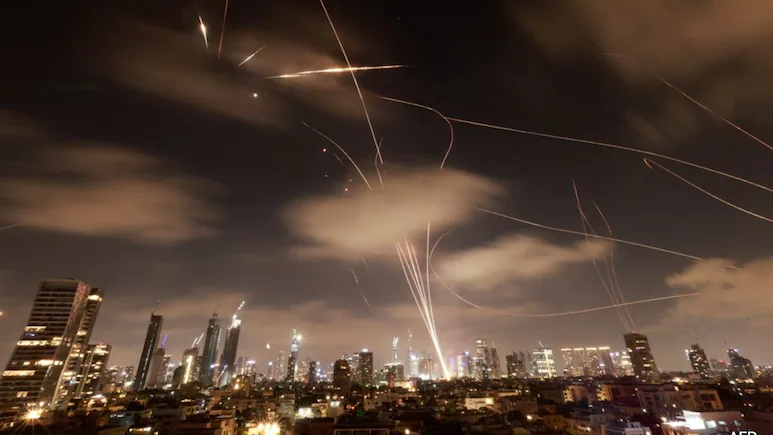
Tehran: In a significant escalation of the ongoing conflict between Iran and Israel, Tehran has confirmed the use of its advanced Fattah-1 hypersonic missile during an overnight strike. The missile was deployed as part of the 11th wave of “Operation Honest Promise 3”, with Iran’s Revolutionary Guard Corps claiming that Iranian forces now maintain “complete control over the skies of the occupied territories”.
What is Fattah-1?
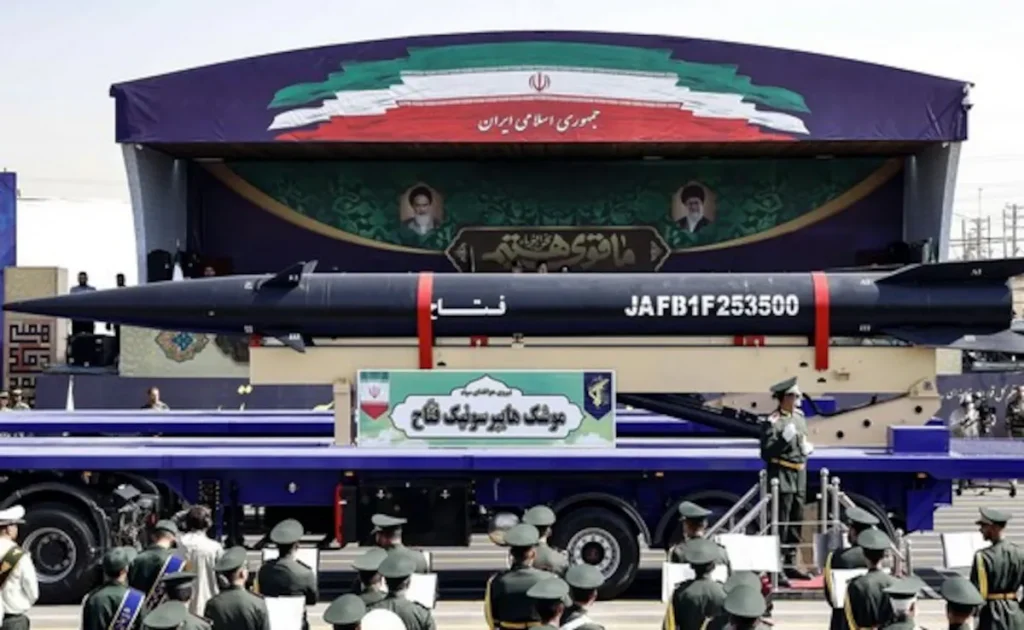
The Fattah-1, Iran’s first hypersonic missile, was unveiled in 2023. Named by Supreme Leader Ayatollah Ali Khamenei, the missile is designed to bypass modern missile defence systems, including Israel’s Iron Dome and Arrow. It features a hypersonic glide vehicle (HGV) warhead, capable of maneuvering mid-flight, allowing it to evade interception.
- Length: 12 meters
- Range: Up to 1,400 kilometres
- Payload: 200 kilograms of explosives
- Speed: Up to 17,900 km/h
According to Iran Watch, the missile uses solid fuel and a single-stage propulsion system, giving it the capability to reach targets with extraordinary speed and precision. The Revolutionary Guard refers to it as the “Israel-striker”.
What Makes a Hypersonic Missile Different?
Hypersonic weapons like the Fattah-1 can travel at speeds exceeding Mach 5, or five times the speed of sound. Unlike traditional ballistic missiles, hypersonic missiles can adjust their flight paths within the atmosphere, making them highly unpredictable and difficult to neutralize.
Fabian Hinz, a defence expert from the International Institute for Strategic Studies, describes the Fattah-1’s warhead as being mounted on a “manoeuvrable reentry vehicle” that can shift course mid-descent.
Previous Use of Fattah-1 in Conflict
Though not the first use of hypersonic missiles by Tehran, this is believed to be the first deployment of Fattah-1 during the current conflict. Iran had previously used dozens of these missiles on October 1, 2024, during Operation True Promise II, targeting Israeli positions in Jerusalem.
Ongoing Iran-Israel Tensions
The missile strike comes amid heightened hostilities that began last Friday, following Israel’s unprecedented aerial offensive on Iranian nuclear and military sites. Both nations have suffered civilian casualties, and global powers are working urgently to evacuate their nationals.
Israel alleges that its retaliatory strikes have killed high-ranking Iranian figures, including Ali Shadmani and his predecessor Gholam Ali Rashid.
With tensions escalating and both sides unwilling to step back, the region remains on edge amid fears of further escalation involving advanced, hard-to-intercept weaponry.