


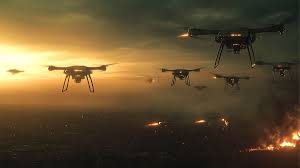
In a dramatic escalation of unmanned warfare, Ukraine’s latest drone offensive — dubbed ‘Operation Spider’s Web’ — has shifted the paradigm of battlefield engagement, striking multiple Russian military airfields thousands of kilometers from the frontlines.
In a meticulously orchestrated mission that reportedly took 18 months to plan, Ukraine launched a series of drone strikes deep into Russian territory on June 1. Utilizing compact FPV (first-person view) drones, Kyiv’s forces hit at least five strategic airbases, including one in eastern Siberia, located nearly 4,000 km from active combat zones.
According to Ukrainian authorities, the attack resulted in the destruction of 41 aircraft, including rare and strategic bombers like the Tu-22M3, Tu-95, and A-50 models — some of which are no longer in production. The damage was estimated at $7 billion.
President Volodymyr Zelensky hailed the operation as a historic success, calling it “an absolutely brilliant result.” He noted that the operatives involved were safely extracted from Russian territory after the attack.


A Modern-Day ‘Trojan Horse’ Offensive
Sources familiar with the operation revealed a sophisticated strategy. FPV drones were covertly transported into Russia inside wooden cabins placed on trucks. These containers featured remotely retractable roofs, allowing the drones to be launched discreetly. The mobile deployment system allowed the drones to travel undetected across vast distances before targeting airfields.
While Russia’s Defence Ministry acknowledged the attacks, it claimed successful interception of some drones in the Ivanovo, Ryazan, and Amur regions. However, satellite imagery and local footage from Irkutsk suggested that the drones inflicted considerable damage, sparking large fires and destroying key assets.
Why This Operation Changes the Battlefield Game
This operation is significant for several reasons:
- Strategic Depth of Attack: Unlike previous assaults near border zones using large fixed-wing drones, this offensive employed small, daytime-launched FPV drones, striking targets thousands of kilometers inland — a first in the war’s history.
- Impact on Russian Bomber Fleet: With about one-third of Russia’s strategic bombers potentially taken out in one night, the loss could severely impact its long-range strike capabilities, especially as these aircraft are hard to replace.
- Innovation in Covert Deployment: Ukraine’s SBU security service executed the mission with stealth, using disguised cargo vehicles to transport and house the drones. Analysts noted similarities to the 2022 Kerch bridge attack, where explosives were smuggled inside a truck.
- Technological Adaptation: The drones used Russian mobile networks to transmit real-time footage back to Ukrainian operators, ensuring high precision and allowing footage of the strikes to be shared on social platforms.
- Global Security Implications: Analysts like Thomas Shugart of CNAS suggest the attack is a wake-up call for global powers. The ability to deploy thousands of drones from inconspicuous locations — like railyards or civilian vehicles — opens up new vulnerabilities, even for highly developed militaries.
A New Era of Warfare
Security experts now warn that the lines between conventional and unconventional warfare have blurred. Alex Plitsas, a defense analyst, remarked that traditional metrics of military power — like missiles and jets — are being outpaced by cost-effective drone swarms capable of disabling strategic infrastructure.
With peace talks scheduled in Istanbul on June 2, the timing of the attack also underscores Ukraine’s message of resilience and capability amid continued Russian aggression.
‘Operation Spider’s Web’ is not just a tactical win for Ukraine — it marks a transformative moment in military strategy, one likely to be studied in war colleges and defense think tanks for years to come.